01In development
Elections · US vs Spain
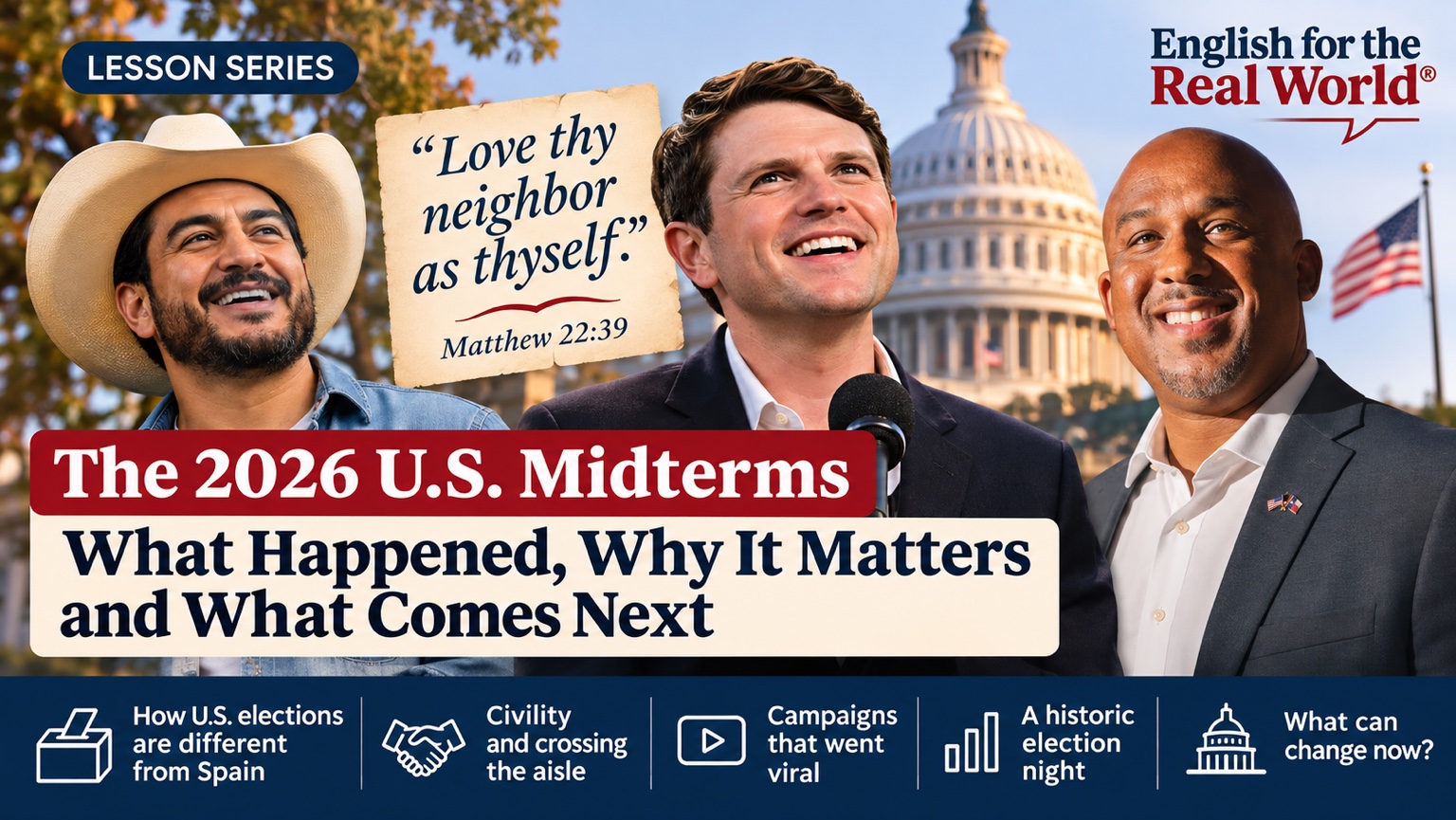
Why Do Americans Vote in the Middle?
What's a midterm, why can Americans vote for candidates from different parties on the same ballot, and how is that different from Spain? Meet split-ticket voting and the freedom to vote your conscience.
Could you vote for a candidate from a party you usually disagree with?
02In development
Texas · Civility · Political identity
That's Senator Talafreako!
A political insult, a surprising slogan and a message about loving your neighbour. Explore James Talarico, humour, civility and what it means to win support across party lines.
Can you strongly disagree with someone without treating them as an enemy?
03In development
Campaign adverts · Humour · Viral video
Politics Has Gone Viral
From Scott Colom's “Pick Another Protein” campaign to Abdul El-Sayed's playful videos: how can a thirty-second clip start a serious debate about prices, persuasion and political image?
What makes a political advert funny—and what makes it convincing?
04In development
History · Results · Surprises
An Election for the History Books
Texas, Mississippi, milestones in representation and results that challenged expectations. Discover the people and numbers behind the headlines—without getting lost in statistics.
How much can one election change a country's political story?
05In development
Congress · The presidency · The states
So, What Happens Now?
Can Congress stop a president? Can governors change things in their own states? And can elected politicians vote against their party? A practical look at what political power really means.
Who should a politician be loyal to: their party, their voters or their conscience?